HARBOR DECK & FENCE · TACOMA, WA
A better railing starts with solid connections and the right system for your deck. Harbor Deck & Fence installs, replaces, and repairs deck, porch, and stair railings in aluminum, cable, glass, wood, composite, and steel.
Installation · Replacement · Railing repair · Stair handrails
Whether you need a new deck railing installation or help with a loose, aging railing, we begin with the structure underneath. Posts, framing, mounting hardware, corners, and stair transitions all affect the finished result.
We help Tacoma homeowners compare appearance, view, upkeep, and budget, then define the installation or repair scope in a written estimate. Building a whole new deck? We can coordinate the railing with our custom deck construction.
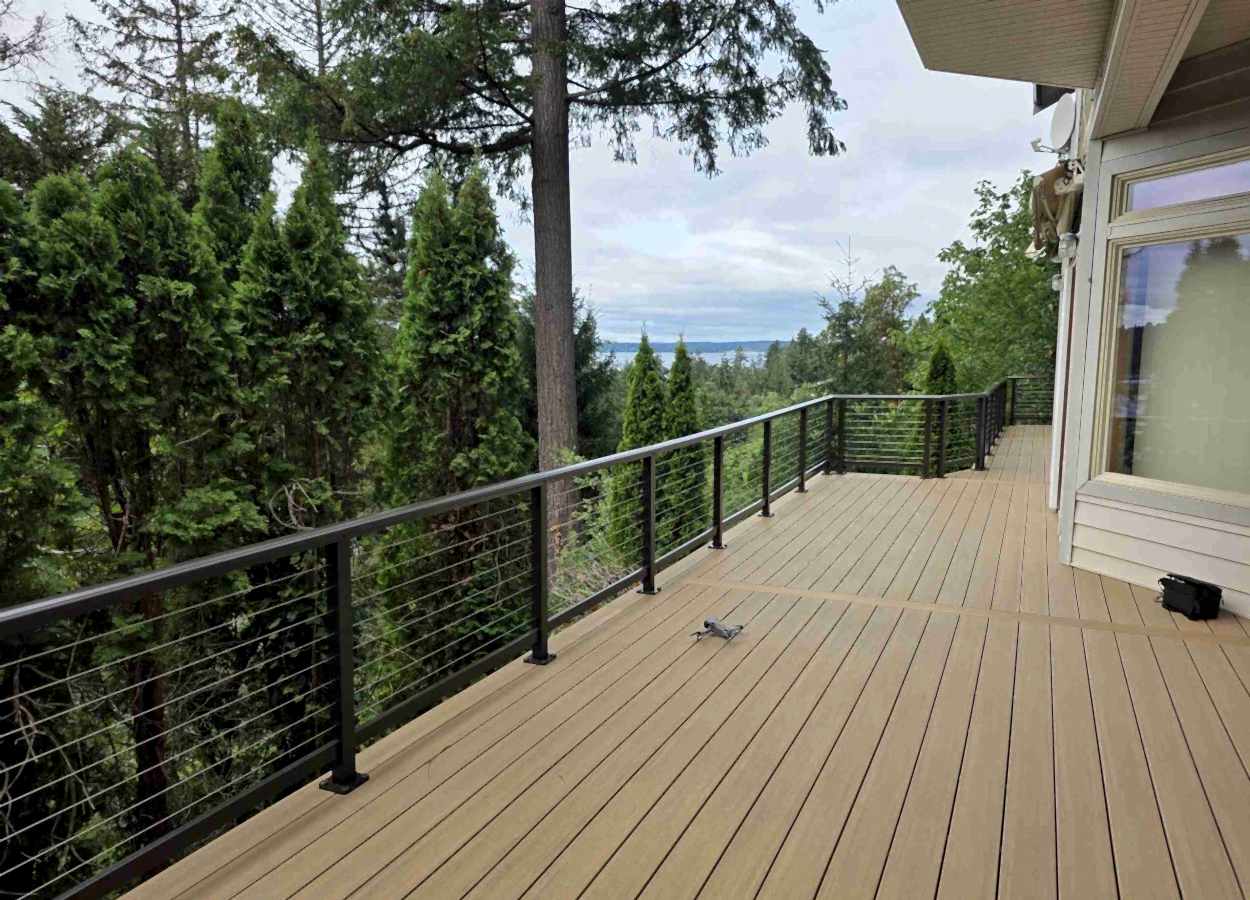
Start with the frame, then choose the infill. Aluminum and wood describe frame materials; cable, glass, balusters, and wire panels describe what fills the openings. Not every combination is supported by every railing manufacturer.
Powder-coated aluminum offers slim profiles and a clean finish without the staining or sealing required by wood. Choose picket-style panels or a system designed for cable or glass infill. Black, white, and bronze finishes are common choices; availability depends on the product line.
Consider: cleaning requirements, finish protection, mounting details, and hardware suited to the exposure. Low maintenance still includes care, especially near salt air.
Stainless steel cable infill works with compatible aluminum, steel, or wood framing to create open sightlines. Horizontal and vertical options depend on the selected system. We plan posts, corners, stairs, and terminations together rather than treating cable as an add-on.
Consider: post strength, cable spacing and tension, manufacturer instructions, and periodic cleaning. A cable upgrade may require new posts or framing reinforcement.
Glass panels offer a visually open edge for decks, porches, and view-facing spaces. Framed and suitable frameless systems provide different looks. The glass specification, supports, top rail requirements, and mounting method must match the approved system and project requirements.
Consider: fingerprints, rain spotting, cleaning access, and the deck structure. We review the required safety glass for the specific application; ordinary window glass is not a substitute.
Wood railing brings a natural finish to a cedar deck or traditional porch. Options include wood balusters, a wood frame with metal balusters, and compatible cable infill. Top caps and post details can be coordinated with the deck and stairs.
Consider: staining or sealing, drainage at connections, checking and splitting, and eventual component replacement. Sound structural connections matter more than a fresh coat of finish.
Composite or PVC railing systems provide a finished look that pairs well with wood, composite, or PVC decking. Many systems combine post sleeves and rails with metal balusters or other manufacturer-approved infill. Structural support beneath the sleeves is still essential.
Consider: rail proportions, compatible post supports, color choices, and product-specific cleaning instructions. Explore our deck material guide when planning the full deck.
Steel railing can provide a crisp, substantial profile. Welded-wire or hog-wire style panels offer a different look from tensioned cable. Wood-and-metal combinations and approved drink-rail caps add more design choices.
Consider: protective coatings, corrosion exposure, panel openings, compatible connections, and local requirements. We review the proposed assembly before recommending it for an elevated deck.
Compare more looks on our deck railing designs page. We can discuss popular systems from manufacturers such as Trex, TimberTech, Feeney, and American Structures & Design, subject to project suitability and local availability. A brand example does not mean every product or infill combination is interchangeable.
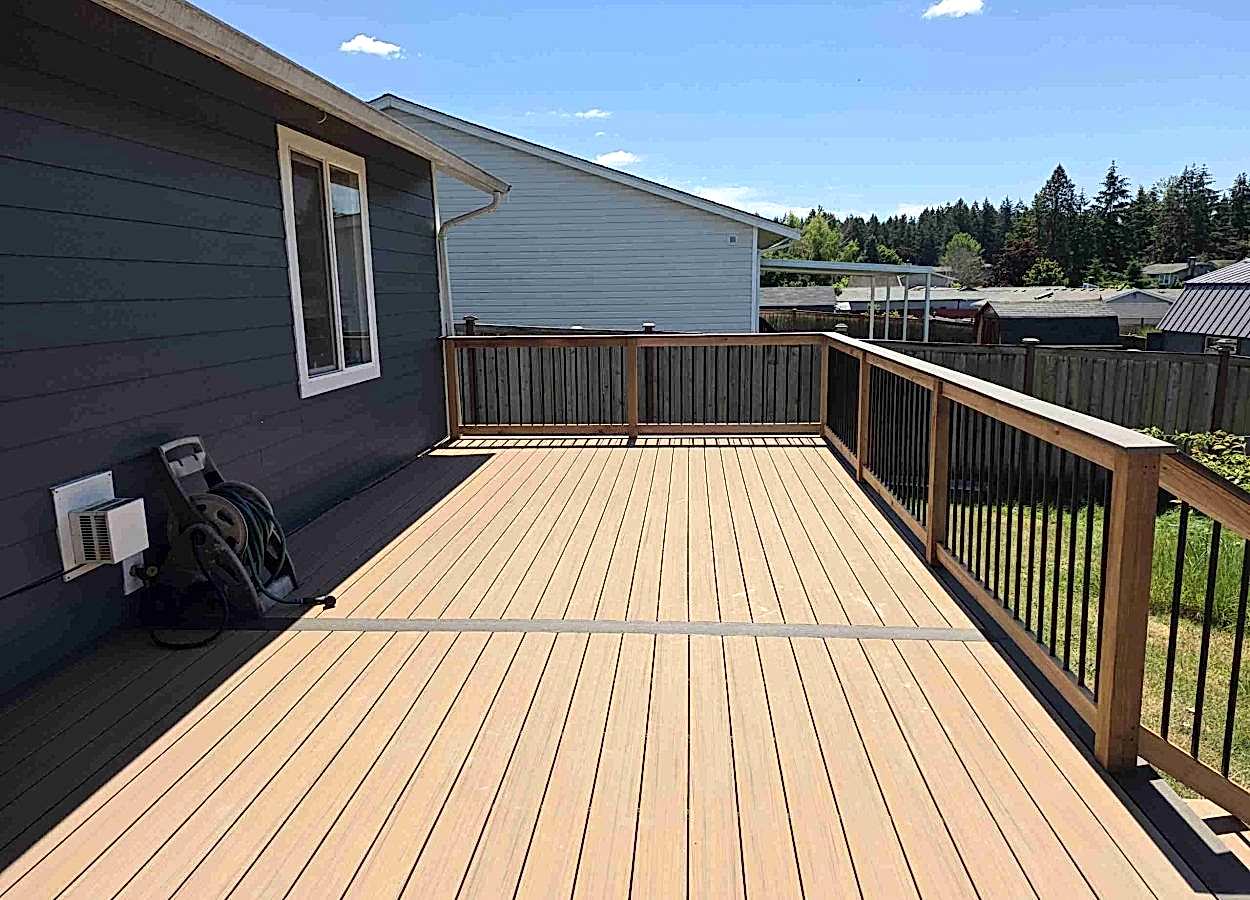
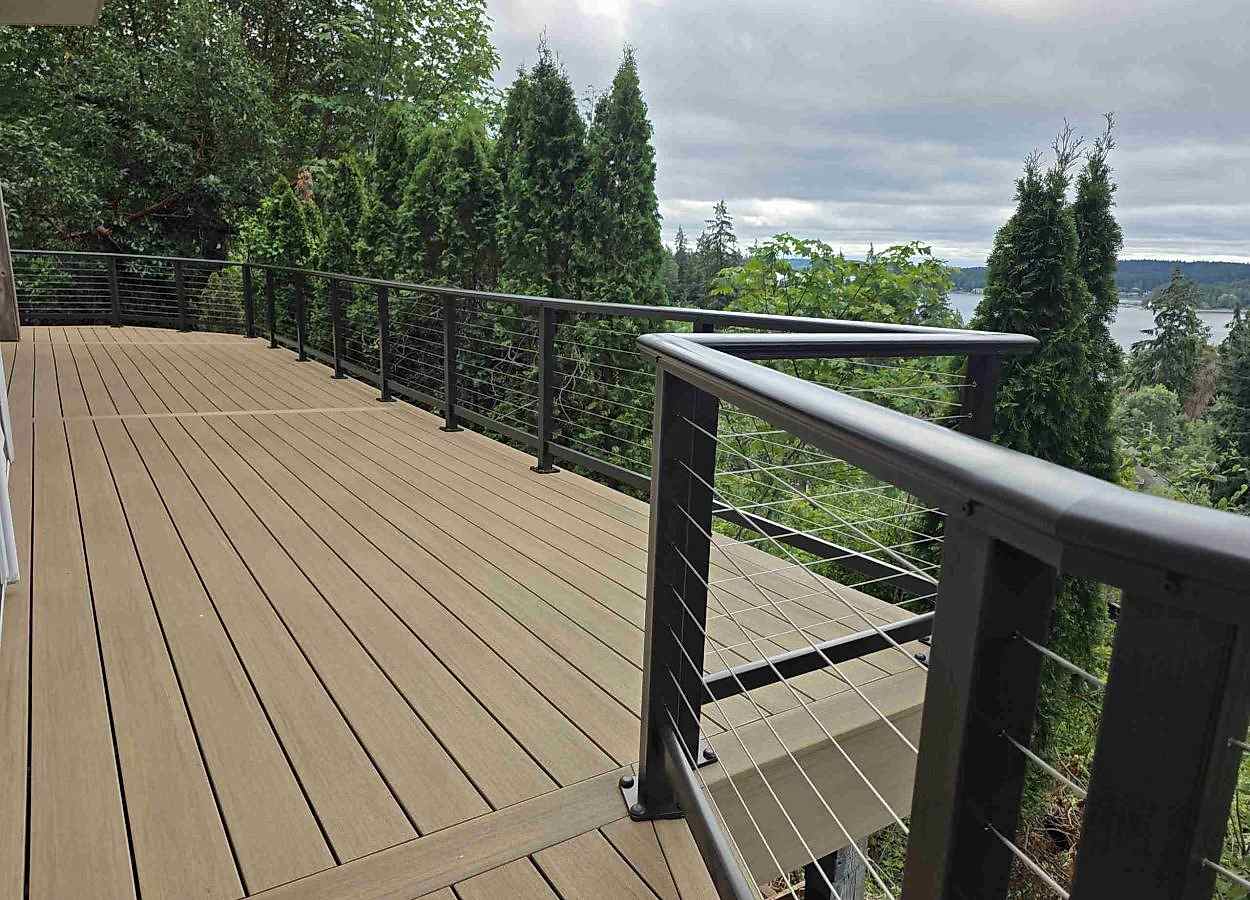
Browse our deck and railing project gallery for more of our work.
Loose posts, missing balusters, deteriorated rails, corroded fittings, and damaged panels deserve more than a cosmetic fix. We inspect the visible railing and its connections to understand what is moving or failing before recommending a repair.
If the supporting deck also needs attention, we can coordinate the railing work with deck framing and structural repairs.
A railing may need replacement when rot is widespread, posts or attachment areas are failing, parts are unavailable, or the existing assembly cannot support the proposed infill. New railing can also be part of a deck resurfacing project when the underlying structure is suitable.
We explain what appears reusable, what needs further investigation, and whether a targeted repair or a new system is the better fit. Hidden deterioration may become visible after old components are removed.
A guard helps protect an open edge. A handrail gives someone a graspable support while using stairs. One assembly may serve both functions only when its design meets the applicable requirements.
A broad drink rail or decorative top cap does not automatically qualify as a graspable stair handrail. We review stair runs, landings, transitions, handrail profiles, returns, and attachment points when planning railing installation or replacement.
Permit and code requirements depend on the jurisdiction, structure, and scope of work. Tacoma’s residential porches and decks guidance explains the distinction between guards and handrails. We confirm applicable requirements for the project rather than applying one height or spacing rule to every situation. Our deck permit process guide explains the planning steps.
Rain, shaded areas, fallen leaves, and salt exposure affect how a railing ages. We consider water drainage, finish care, compatible fasteners, and access for future maintenance while helping you select a system.
For waterfront or salt-exposed properties, review the selected manufacturer’s care requirements before choosing a system. Feeney’s railing care and maintenance resources and TimberTech’s product care guidance are useful references.
Railing is normally planned by the length and layout of the railing, not the square footage of the deck alone. A straight run differs from a deck with several corners, stairs, landings, and custom transitions.
Your estimate depends on the frame and infill, total length, number of posts, stair sections, mounting method, removal and disposal, access, structural repairs, and any required design or permit work. Glass, cable, and mixed-material systems also have product-specific components.
We provide a project-specific written scope so you can compare options without relying on a placeholder price.
Often, yes, if the deck framing and attachment areas can support the selected system. We inspect the visible structure first. New posts, blocking, or other repairs may be needed before new railing is installed.
We assess the post, base or bracket, fasteners, and supporting framing. Tightening a fastener alone will not solve rot, inadequate support, or a failed connection. The repair recommendation depends on the cause and the railing system.
Powder-coated aluminum is a practical option to compare with composite or PVC systems. Cable and glass may also suit the design, but each has cleaning and maintenance requirements. Exposure, view, appearance, and the supporting structure help determine the right choice.
Cable infill creates open sightlines with a slim profile. It needs properly supported posts, compatible fittings, and installation to the selected system’s requirements. We review corners, stairs, cable tension, and maintenance before recommending it.
Some railing systems accept an approved wood or composite top cap. Compatibility depends on the specific product and infill. A drink rail is not automatically a graspable stair handrail, so stairs may need a separate handrail.
We can compare wood, metal finishes, composite or PVC profiles, balusters, and top caps with the existing deck. An exact match to an older or discontinued product may not be available; we explain the practical alternatives.
It depends on the work, the structure, and the property’s jurisdiction. Structural changes and alterations can trigger permit or design requirements. We review the proposed scope and confirm what applies with the relevant permitting authority.
The condition of the posts and framing, railing length, stairs, material, mounting method, access, and removal work all affect cost. A short repair and a complete cable or glass system are different scopes. Contact us for a written estimate based on your project.
Yes. We can discuss porch guards, deck stair railings, landings, and graspable exterior handrails as part of the project. We review the mounting surface and the applicable requirements before recommending an assembly.
Photos of the full railing, stairs, loose or damaged areas, and the attachment points are helpful. Include your project address, approximate railing length if known, and whether you want repair, replacement, or a different style. We confirm the details during assessment.
Harbor Deck & Fence works with homeowners in Tacoma, University Place, Lakewood, Gig Harbor, and nearby communities. Contact us with your project address to confirm service availability and discuss the railing work you have in mind.
Learn about Harbor Deck & Fence or contact our team for help choosing the next step.
Tell us what needs attention and the look you want. We’ll help you compare repair, replacement, and new railing options for your home.